







 Articles
 - Sintering densification, structural analysis, microstructure and mechanical properties of Al2O3(MgO)/ZrO2(Y2O3) composite ceramics
Aurawan Rittidecha,* and Aekasit Suthapintub
aDepartment of Physics, Faculty of Science Mahasarakham University, Mahasarakham, Thailand, 44150
bFaculty of Science and technology, Rajabhat Mahasarakham University, Mahasarakham, Thailand, 44000This article is an open access article distributed under the terms of the Creative Commons Attribution Non-Commercial License (http://creativecommons.org/licenses/by-nc/4.0) which permits unrestricted non-commercial use, distribution, and reproduction in any medium, provided the original work is properly cited.
Composite ceramics between Al2O3 (6 mol% MgO); AM and ZrO2 (4 mol% Y2O3); ZY with 40:60, 50:50, and 60:40 ratio were prepared. The samples were sintered under different sintering method between normal sintering and two-step sintering method. The effects of the different contents of AM and ZY and sintering condition on the structural analysis, densification, microstructure and mechanical behavior were studied. It was found that composites with higher proportions of ZrO2 showed higher weight percentages of t-ZrO2 and c-ZrO2 phases which is obtained high density and good mechanics properties. The Fracture toughness mechanisms of composites are also discussed in detail around the sintering parameters. The AM:ZY composite ceramics that provides good mechanical properties were revealed in both sintering method in optimum conditions.
Keywords: Al2O3, ZrO2, Composite, Ceramics, Sintering.
Al2O3 has high elastic modulus and compressive strength but its low fracture toughness. Undoped Al2O3 ceramics, when heated in sintering process at high temperatures, often cause irregularities of grains in the microstructure due to abnormal grain growth. This will reduce the bulk density of Al2O3 ceramics and lead to low mechanical properties. Therefore, materials with inertia properties of MgO are added into Al2O3 to control the expansion of grains in the sintering process. MgO is a traditional additive to Al2O3 (AM) since it can reduce the sintering temperature and grain size. In order to improve the fracture toughness of Al2O3 ceramics, a second phase is usually introduced into them, so that the second phase is filled at the grain boundary of alumina, which is conducive to preventing the extension of fracture lines and improving the fracture toughness of alumina ceramics [1, 2]. Zirconia is interested as ceramic steel material in previous works [3-6]. ZrO2 has high resistance to crack propagation, possesses very low thermal conductivity and high strength. The fracture strength of Al2O3 ceramics has been improved by adding ZrO2 as the second phase and sintering to form intergranular or intragranular structure [7]. Zirconia is a polymorphic metastable material within the polycrystalline phase system, and pure zirconia reveals various crystalline phase structures under atmospheric pressure at varying temperatures. ZrO2 obtains in three crystalline forms, including high temperature cubic phase (c-ZrO2), intermidiate temperature tetragonal phase (t-ZrO2) and low temperature monoclinic phase (m-ZrO2) [8]. And there is a transition among the three phases with the ambient temperature. When the pure ZrO2 ceramic are cooled back to room temperature, the tetragonal phase undergoes a reverse phase transition to monoclinic phase, resulting in an increase in volume that generates internal stresses, which in turn leads to cracking in ZrO2 ceramics [9]. Zirconia in the tetragonal form at room temperature which has the best mechanical properties among all forms and provides toughening mechanisms associated with the phase transformation from t-ZrO2 to m- ZrO2 under stress [9, 10]. Many report suggested incorporating oxides as stabilizers into zirconia to prevent the reverse tranformation [3, 11, 12]. Zirconia stabilized with Y2O3 (ZY) has the best properties for mechanical device applications. Stabilizing oxides (e.g. Y2O3) are used to stabilize cubic and tetragonal zirconia forms at room temperature. The stabilization of the tetragonal phase at room temperature is possible by the yttrium (Y3+) substitution of zirconium (Zr4+) and concomitant formation of charge neutralizing oxygen vacancies. The mechanical properties of ZrO2 ceramics with 4 mol% Y2O3 addition depend strongly on the microstructure as well as composition as reported by Rittidech et al.[13]. The ceramic composites between Al2O3 and ZrO2 are of the most widely used in many critical structural ceramics application because of their high strength and toughness [7, 14]. The mechanical properties of Al2O3 -ZrO2 ceramic composites are due to the various proportions of Al2O3 and ZrO2. Composites with a high content of Al2O3 are used in applications requiring high Young’s modulus and high hardness, while composites with a high ZrO2 content can be used where higher compliance is required [15]. The alumina–zirconia system is interesting to study [16, 17]. The ceramic composite between AM and ZY at a ratio of 40:60, 50:50, and 60:40 was prepared. The process of heat treatment is important in preparation of ceramics. The aim of the sintering process of ceramic composite is to obtain a samples with a high densification and homogeneous microstructure consistent of well packed. The microstructure of Al2O3-ZrO2 composite ceramics can be controlled by two ways i.e., either by using additives to prohibit the grain growth, used for obtaining highly dense ceramics, or it can be controlled by using novel processing techniques to modify the microstructure. The process of heat treatment in optimal sintering conditions is important factors. The normal grain growth can be processed by pressureless sintering with appropriate thermal treatment conditions. However, the different proportions composites between Al2O3 and ZrO2 are therefor suitable for the heating process sintering using different conditions. Sintering is defined as thermal treatment of fine-grained material at elevated temperature, but below the melting point of the main constituent, for the purpose of increasing its grain size and strength by bonding together the particles [18]. Two-stage sintering process is one of the ways of eliminating grain growth in the final stage of sintering reported by Chen and Wang [19]. Two stage sintering methodologies involve sintering with thermal pretreatment at a high sintering temperature for short holding times, followed by a second stage at lower temperature for long holding times.
In the present work, the effect of different ZrO2 content on the toughness strength of Al2O3 ZrO2 composites was investigated in characteristic behavior under possible sintering heat treatment. Composite ceramics between Al2O3 using addition of 6 mol%MgO; AM and ZrO2 addition of 4 mol%Y2O3; ZY with 40:60, 50:50 and 60:40 ratio were prepared under heating in sintering at different conditions, both conventional and two stage sintering. The influence of firing conditions on bulk densification, percentage of shrinkage, phase formation, crystal structure calculated by Rietveld refinement, microstructure and microhardness is also investigated.
Al2O3-ZrO2 composite ceramic were used as matrix powders to which Al2O3 was added MgO 6.0 mol% to form AM and ZrO2 was added Y2O3, 4.0 mol% to form ZY. The powder of AM :ZY at 60:40, 50:50 and 60:40 ratios were mixed together in different content and then wet ball milled for 24 h. After ball-milling, drying in electronic furnaces and sieving with 120 mesh, the resulting powders were annealed at 1200 °C, with dwell times of 120 min and heating/cooling rates of 10 °C/min. The (100-x)AM-xZY composite powders (x=40, 50, 60) were then pressed at 3MPa to form pellets having 1.5 cm diameter using a hydraulic press and sintered in an alumina crucible under two stage sintering (TS) with three different conditions and normal sintering (NS) with two conditions according to our the previous research based on alumina zirconia materials [13, 20, 21]. The two stage sintering conditions were (TS-1) T1 temperature at 1600 °C for 30 min and T2 temperature at 1450 °C for 5 h, (TS-2) T1 temperature at 1600 °C for 30 min and T2 temperature at 1450 °C for 10 h, (TS-3) T1 temperature at 1650 oC for 30 min and T2 temperature at 1450 °C for 5 h. The normal sintering (NS-4) temperature at 1600 °C for 5 h, and (NS-5) temperature at 1650 °C for 5 h. The sintering experiments were carried out in an electrical furnace (Nabertherm, Germany). The bulk densities of sintered sample were calculated using Archimedes’ method. The phase composition was investigated by an X-ray powder diffraction using an X-ray diffractometer (Bruker model D8 advance). Quantitative phase analyses were performed by fitting the measured data using the Rietveld refinement method in TOPAS software. Microstructural analysis was performed by using Scanning Electron Microscopy (SEM) (JEOL JSM-840A) of sintered samples on a polished surface. The microhardness of the bulk ceramics was measured using a micro scan from Vickers and Knoop (FM- 700e type D, Future Tech., Japan).
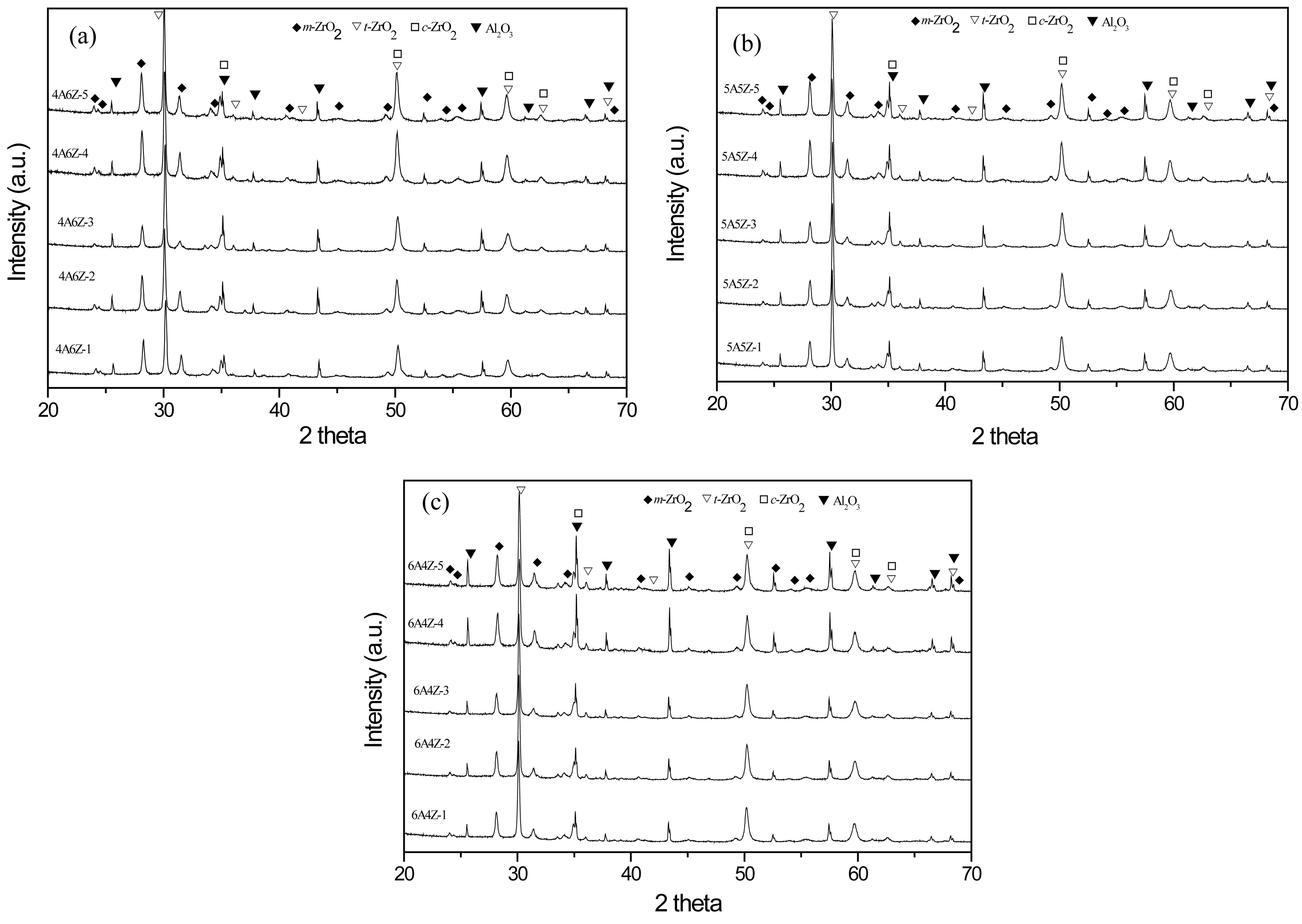
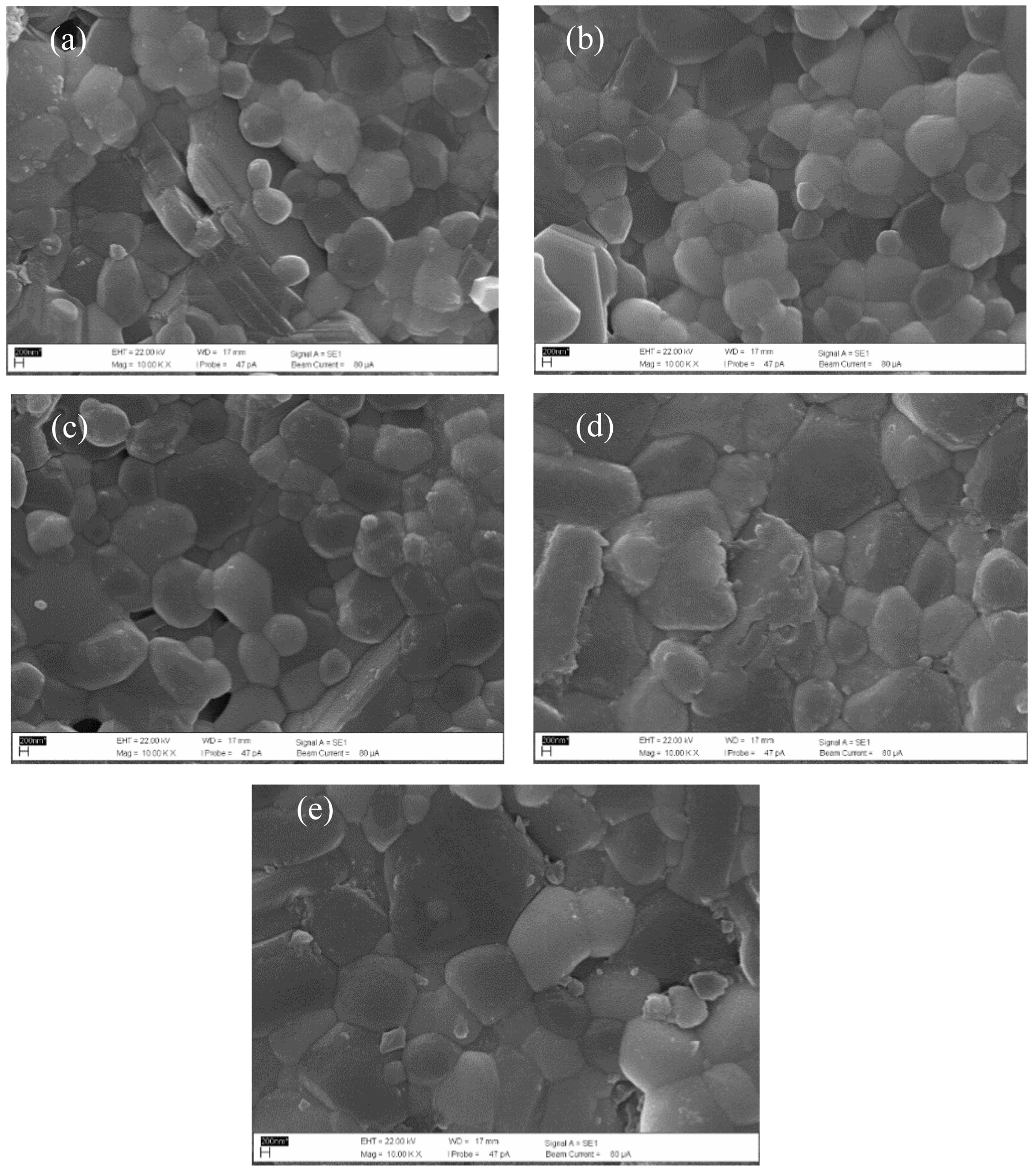
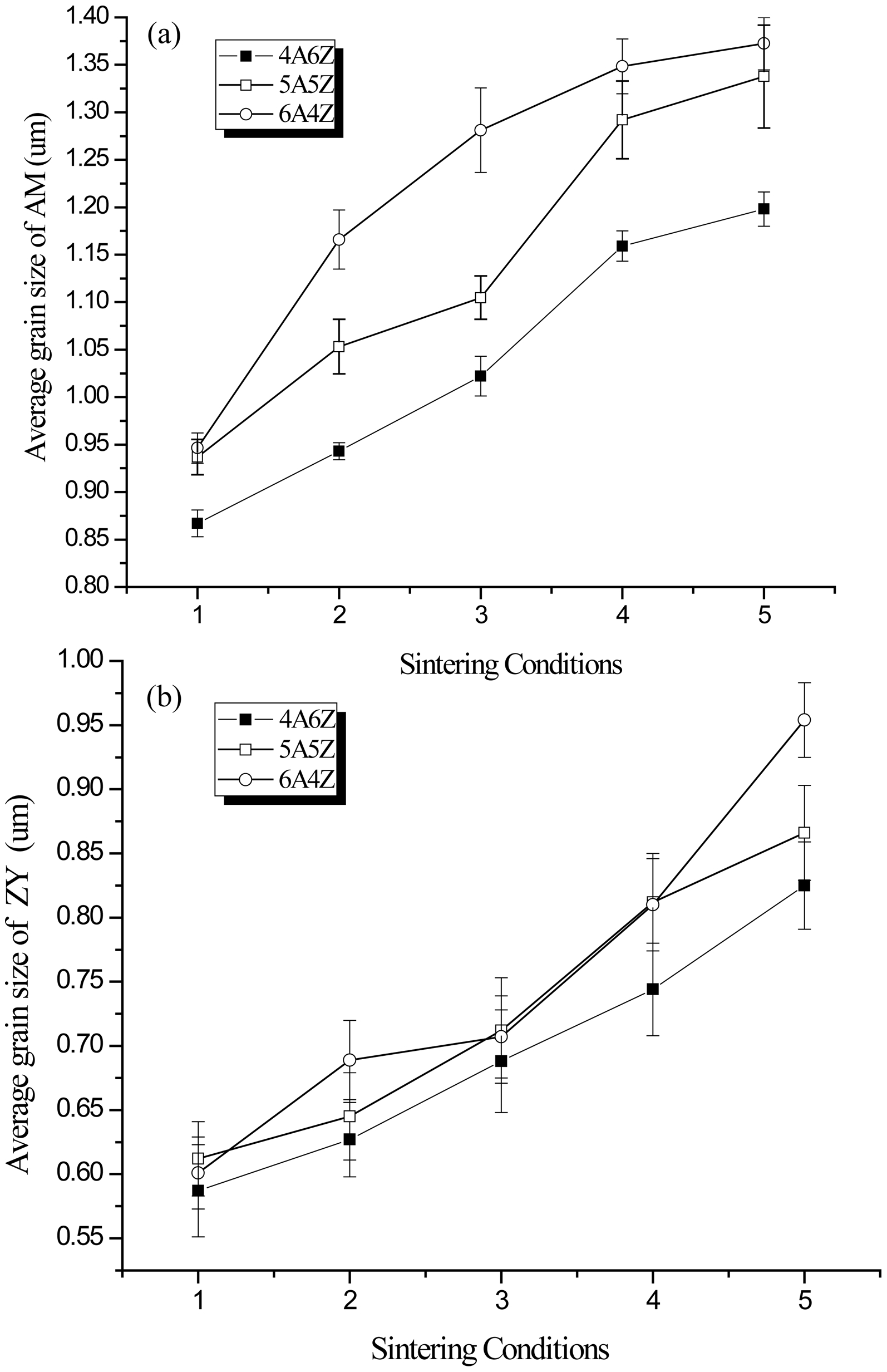
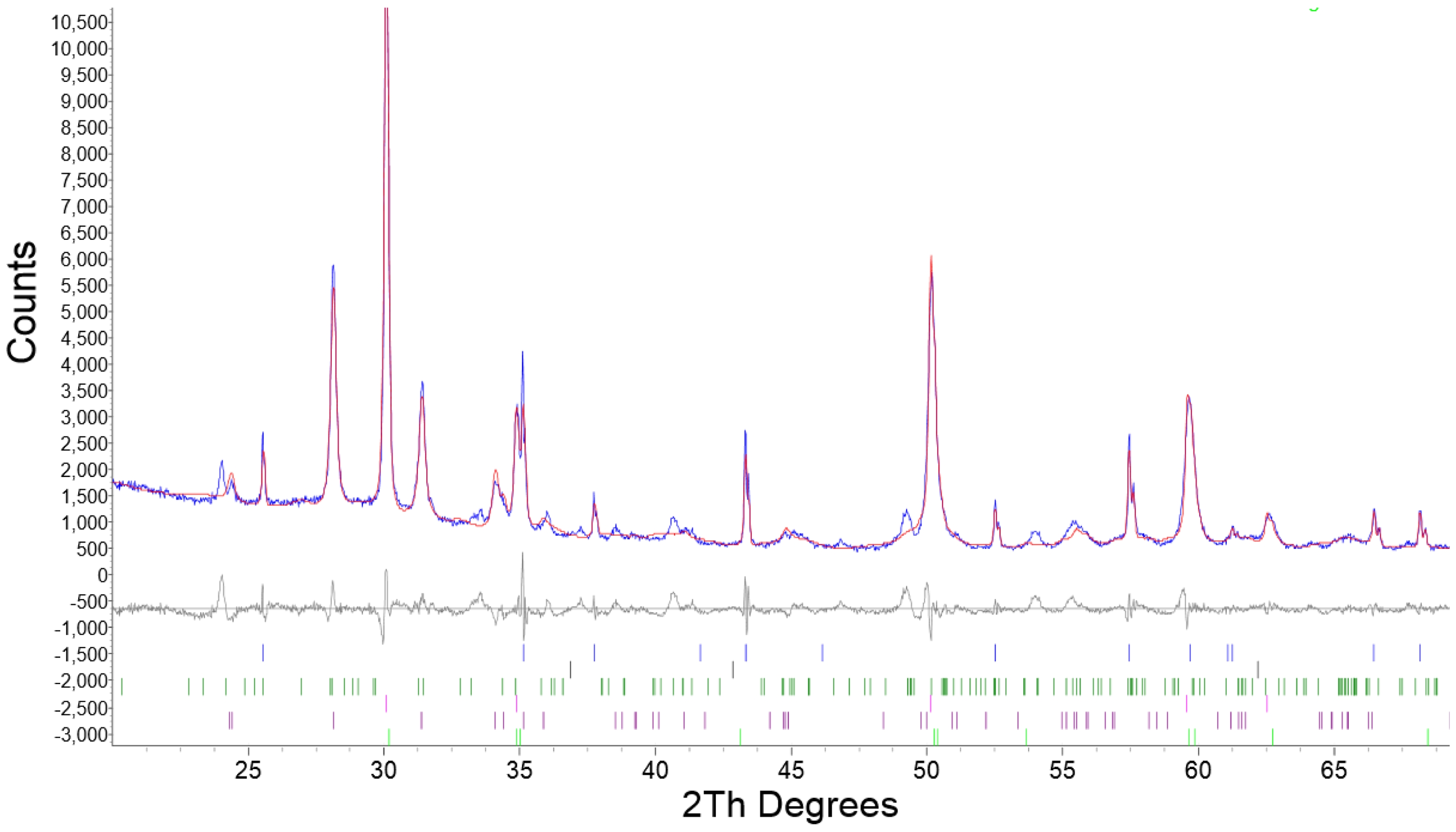
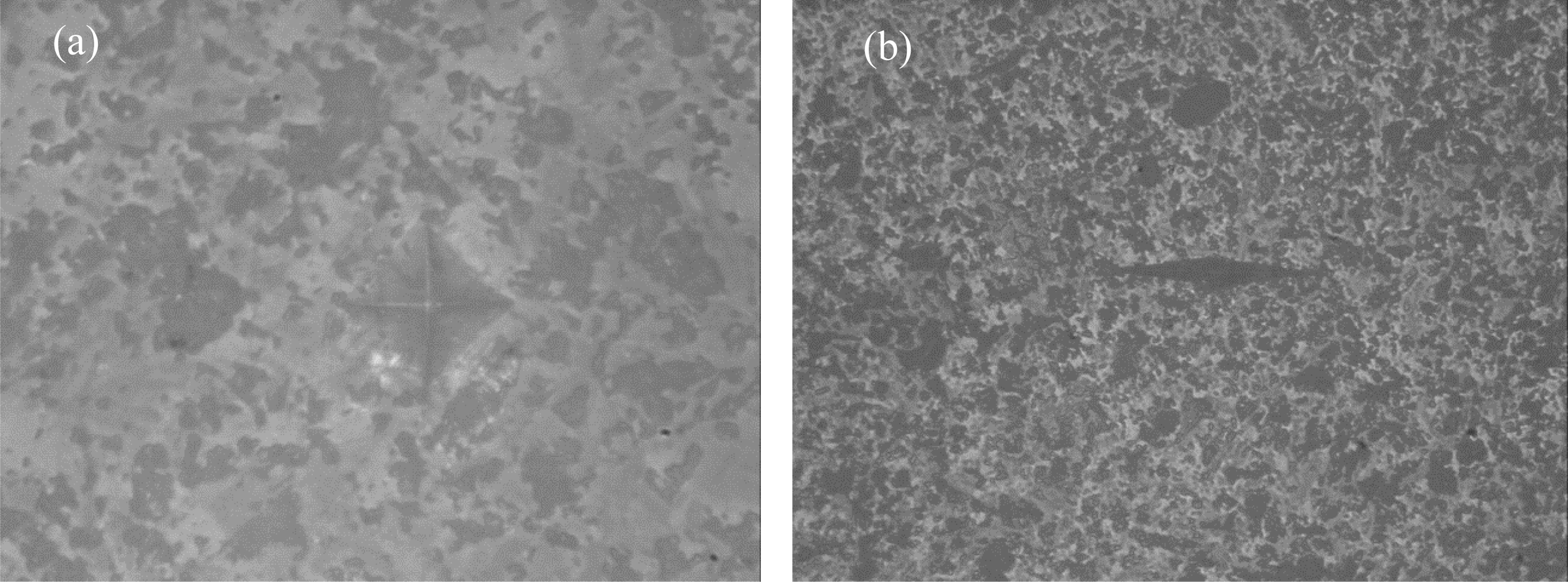
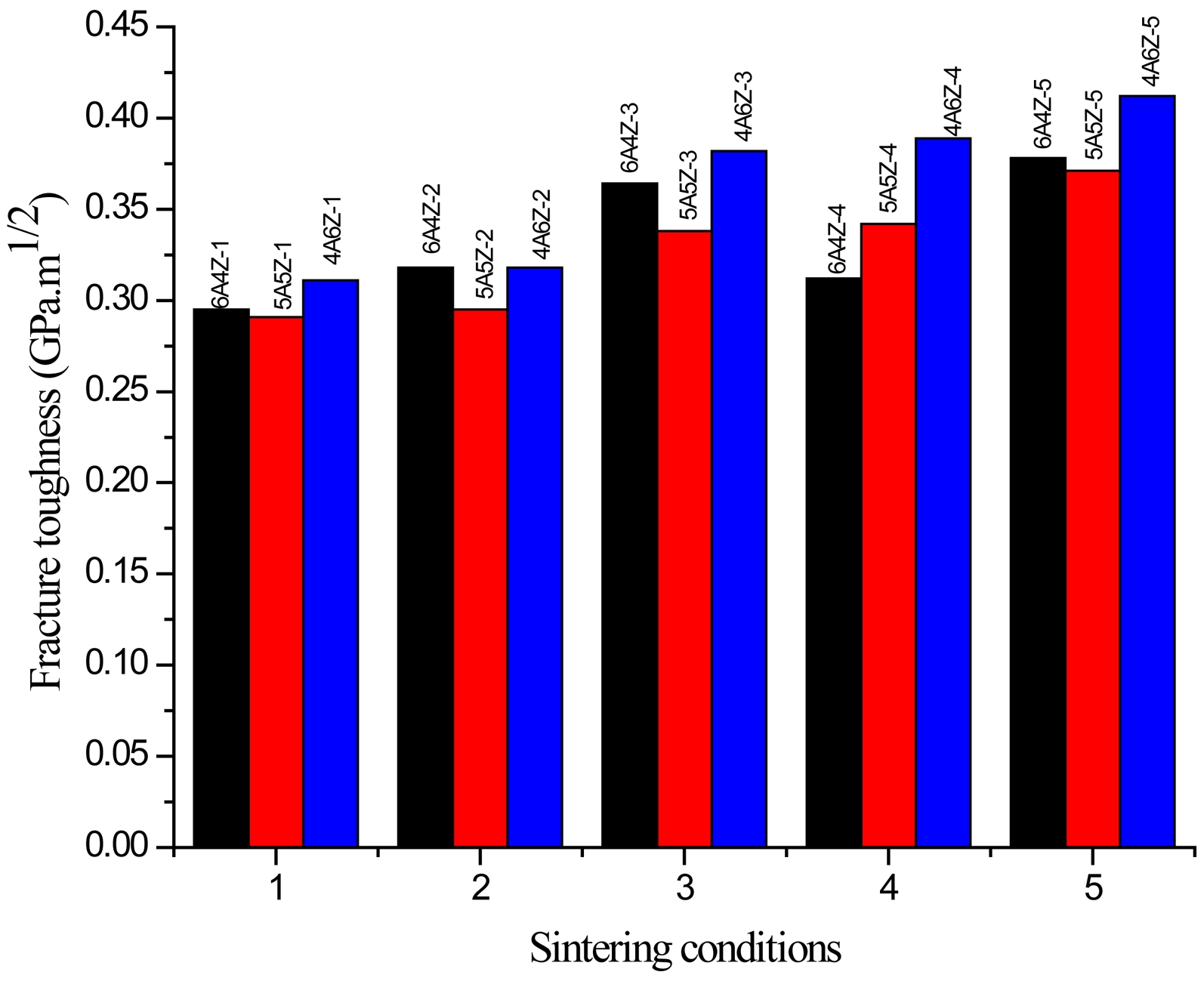
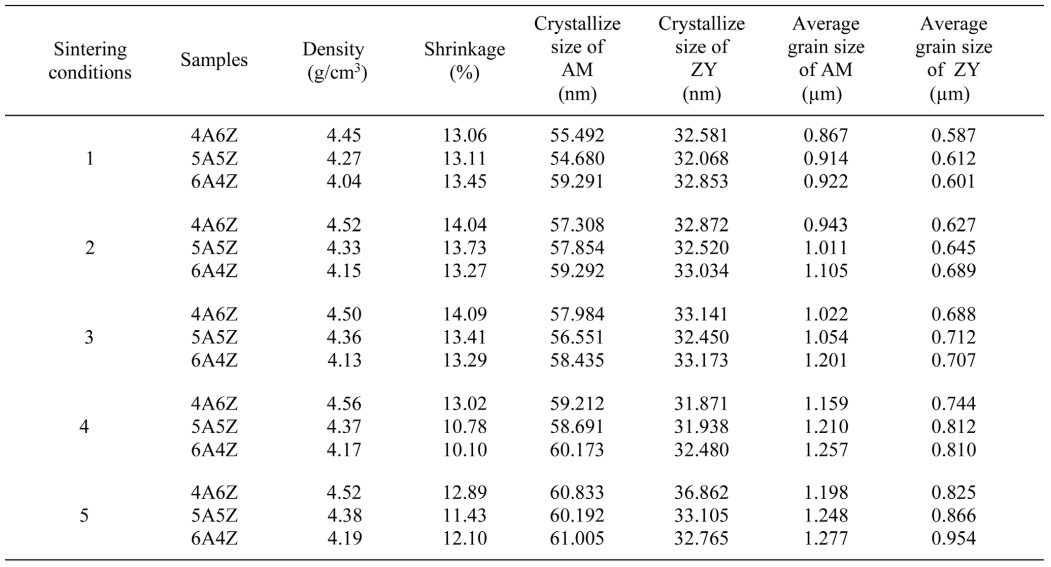
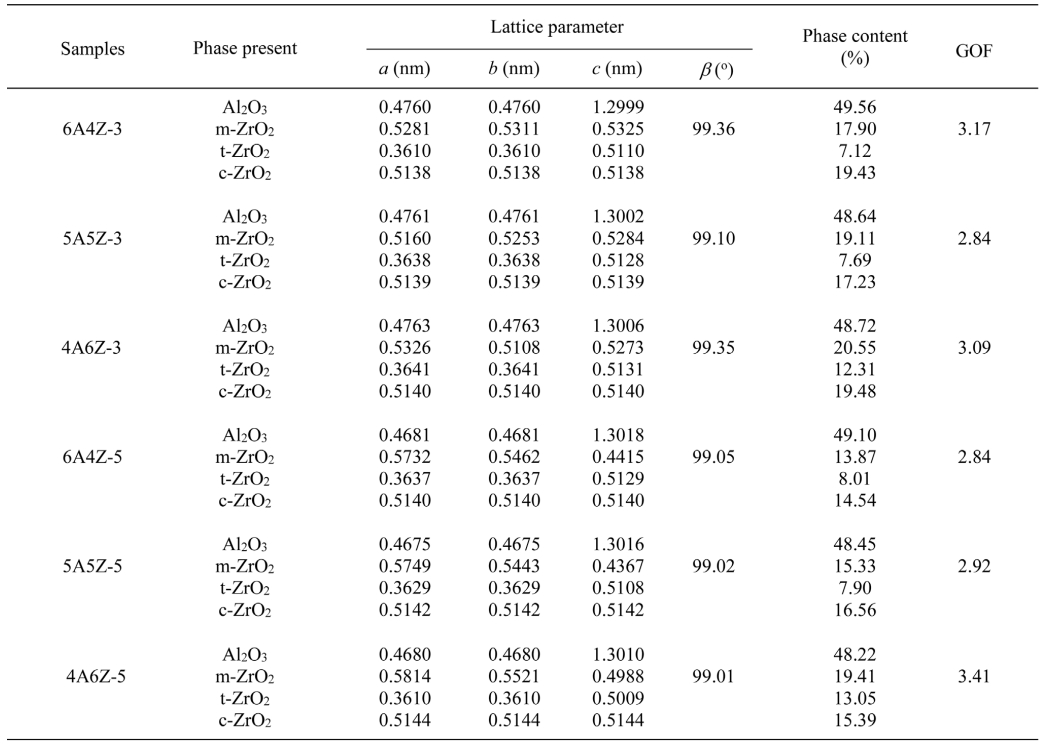
Figures 1(a-c) were obtained XRD patterns of (100-x)AM-xZY (x = 40, 50, 60) composites ceramic with different sintering conditions. All three XRD patterns consist of two main phases of alumina and zirconia. Apart from the alpha (α)-Al2O3 and monoclinic (m), tetragonal (t), cubic (c) zirconia was found. The main reflections in the pattern form around 2θ as 25, 35, 43, 57 and 67° that closely match the characteristic reflections of alumina phase and 2θ as 28, 30, 31, 35, 50, 60 confirmed zirconia phase consistent with the characteristic reflections of Al2O3–ZrO2 [21-24]. X-ray diffraction patterns of AM-ZY composites ceramic with more content of ZY (in Fig. 1(a)) was clearly revealed the high intensity peak of ZrO2 phase. The conditions of heating number 1, 2 and 3 are two stage sintering. The number of 1 and 2 of two stage sintering condition are different at the length of holding times in the second step. It was found that for the length of holding times is revealed a sharp peak of XRD. The conditions of heating number 4 and 5 are normal sintering where there is a difference sintering temperature between 1600 °C and 1650 °C. It can be found that the normal sintering method were showed a high intensity and sharp XRD peaks. Densities of sintered samples were determined using the Archimedes principle. Table 1 contains data about the densities, percentage of shrinkage, crystallize size and average gain size of (100-x)AM-xZY (x = 40, 50, 60) composites ceramic with different sintering condition. It was observed that the density was between 4.04-4.56 g/cm3. The AM-ZY composites ceramic with more content of ZY were showed a highly dense of composites ceramic. The optimal density was obtained in the sample with the two stage sintering condition of TS-3 (T1 temperature at 1650 oC for 30 min and T2 temperature at 1450 oC for 5 h and normal sintering using sintering temperature at 1650 oC for 5 h (NS-5). The promotion of densification by the addition of yttria in zirconia and magnesia in alumina under optimal sintering condition is revealed a high final density than when using undoped [21, 25]. The crystalline sizes of AM and ZY phases calculated from the XRD patterns using Scherrer equation [26] are summarized in Table 1. The crystalline sizes of AM were in the range 54.680-61.005 nm and for ZY they were in the range 31.871-36.862 nm. Fig. 2(a)-(e) shows the SEM micrographs of as-received 50AM-50ZY composite ceramics with different sintering condition. The microstructure of the sintered 50AM-50ZY composite ceramics is showed a smaller spherical grain shape of the ZY phase, while the AM phase is larger and darker grains supported by the other research [21, 27, 28]. Microstructural characteristics in Fig. 2(a)-(e) were observed, i.e., uniform sized grains with well-packed and continuous grain structure. By applying the linear intercept method [29] the average grain sizes in SEM micrographs were measured for these samples as shown in Table 1. It can be seen that (100-x)AM-xZY (x = 40, 50, 60) composite ceramics with different sintering condition showed average grain sizes for AM in the range 0.867-1.257 µm (in Fig. 3(a)), while the average grain sizes of ZY was 0.587-0.812 µm (in Fig. 3(b)). When a comparison of the grain sizes of (100-x)AM-xZY (x = 40, 50, 60) composite ceramics with different sintering condition between two stage sintering (TS-1, TS-2,TS-3) and normal sintering (NS-3, NS-4), it was found that the sizes of grains (100-x)AM-xZY (x = 40, 50, 60) in composite ceramics with two stage sintering condition was smaller than in ceramics from normal sintering. Moreover, it can be found the average grain size value tend to increase with the length of holding times in the second step of two stage sintering and the high temperature with normal sintering. Almost no abnormal grain growth appeared. This supported previous research, in which the composite ceramics between alumina and zirconia restrained abnormal grain growth in alumina-based materials [30, 31]. In addition to the appropriate sintering condition MgO doped in alumina is also an important factor in controlling grain size as reported in the other works [32]. Full pattern matching refinement of XRD patterns was performed using the TOPAS program based on the rietveld method. This obtained more detailed information on crystallographic spectra of (100-x)AM-xZY (x = 40, 50, 60) composite ceramics with different sintering condition and selected samples of 50AM-50ZY composite ceramics with the two stage sintering of TS-3 as shown in the XRD refinement pattern in Fig. 4. The fitted patterns were in good agreement with the respective experiment data, denoted by GOF factors and selected from highly dense samples with sintering condition of the TS-3 and NS-5 listed in Table 2. The lattice parameter of the AM is showed to be in the range of 0.4675–1.3018 nm, while the ZY phase consists of three different crystallographic system; m-ZrO2, t-ZrO2 c-ZrO2. It was found that two stage sintering condition by the length of holding times at T2 temperature and normal sintering with high temperature were obtained the high percentage of phases content of t-ZrO2, c-ZrO2. The mechanical properties of (100-x)AM-xZY (x = 40, 50, 60) composite ceramics with different sintering conditions were investigated by measuring microhardness by Knoop and Vickers techniques and then calculating the fracture toughness values. The selected 50AM-50ZY samples with two sintering conditions of TS-3 are shown as indentation of Vickers and Knoop hardness micrographs in Fig. 5(a-b). Fig. 6 shows the relationship between fracture toughness values of (100-x)AM-xZY (x = 40, 50, 60) composite ceramic and the different sintering conditions. The fracture toughness values of (100-x)AM-xZY (x = 40, 50, 60) composite ceramic is obtained to be in the range of 0.287–0.423 GPa.m1/2. Two stage sintering conditions (TS-1, TS-2, TS-3), it was found that the fracture toughness values increased with T2 temperature during length holding times as TS-2 condition and at high temperature of T1 with short holding times as TS-3 condition. While, normal sintering conditions (NS-4 and NS-5), the optimal sintering temperature were obtained from NS-5, which is used sintering temperature at 1650 °C with holding time for 5 h. The sample of 40AM-60ZY composite ceramics with sintering conditions of TS-3 andNS-5 had a high fraction of t-ZrO2, c-ZrO2 phases. These results confirm that increases in hardness were due to the well-packed and continuous grain structure, corresponding to densities and phase analysis. The fracture toughness values of all compositions was higher than that of the Al2O3-ZrO2 with only doped Y2O3 in previous reported [21]. The highest value for fracture toughness using two sintering conditions was demonstrated by 40AM-60ZY composite ceramics using TS-3 condition as T1 temperature at 1650 oC for 30 min and T2 temperature at 1450 °C for 5 h and obtained from 40AM-60ZY composite ceramics using normal sintering from NS-5 condition with sintering temperature at 1650 °C for 5 h, which corresponds to the highest percentage fraction in the tetragonal phase and cubic phase by XRD. It had high densification and optimal microstructure revealed by SEM. The addition of ZrO2 promoted the sintering of composites, resulting in a higher density and higher hardness in agreement with the studies of Yildiz et al. [7], Vakhshouri et al. [31]. When consideration the use of different heat treatment between two stage sintering and normal sintering in (100-x)AM-xZY (x = 40, 50, 60) composite ceramics, it was found that more content of AM that using two stage sintering were revealed composite ceramics with a high density, an appropriate microstructure and good mechanical properties. These results support a two stage sintering mechanism that inhibits abnormal grain growth in alumina [21]. While (100-x)AM-xZY (x = 40, 50, 60) composite ceramics with high content of ZY that using normal sintering at high temperature was obtained a highly dense composite ceramics, which is the result of addition of ZY phase in AM phase that reduces abnormal grain growth at high sintering temperature. However, from the past research related to alumina zirconia composite materials, it was revealed that the different proportion between Al2O3 and ZrO2 influenced the heat treatment with different sintering conditions. The previous work by Suthapintu et al. [20] have studied the preparation of alumina zirconia composites at proportion of 50:50 using two stage sintering routes with T1 at 1600 °C for 30 min and T2 at 1450 °C for 5 h and showed the fracture toughness of 0.298 GPa.m1/2. A. Rittidech et al. [33] prepared alumina zirconia composites at proportion of 50:50 under two stage sintering routes with T1 at 1600 °C for 60 min and T2 at 1450 °C for 10 h. It was found that the alumina zirconia composites were obtained an increased the fracture toughness of 0.320 GPa.m1/2. In this research, when compared to Al2O3-ZrO2 composite materials in the same proportion (50:50) with modified thermal condition in both normal and two stage sintering. The alumina zirconia composites using normal sintering with temperature at 1650 °C for 5 h (NS-5) was showed a fracture toughness of 0.371 GPa.m1/2 while using a two stage sintering with T1 at 1650 °C for 60 min and T2 at 1450 °C for 5 h (TS-3) was obtained a fracture toughness of 0.338 GPa.m1/2.
|
Fig. 1 XRD patterns of (100-x)AM-xZY (x = 40, 50, 60) composites ceramic with different sintering conditions (a) 40AM-60ZY (b) 50AM-50ZY (c) 60AM-4ZY. |
|
Fig. 2 SEM micrographs of as-received 50AM-50ZY composite ceramics with different sintering condition (a) TS-1 (b) TS-2 (c) TS-3 (d) NS-4 (e) NS-5. |
|
Fig. 3 The relationship between average grain sizes values and sintering conditions (a) AM (b) ZY. |
|
Fig. 4 Rietveld refinement of 50AM-50ZY composite ceramics with two stage sintering of TS-3 condition |
|
Fig. 5 Indentation of microhardness of 50AM-50ZY composite ceramics with two stage sintering of TS-3 condition (a) Vickers (b) Knoop. |
|
Fig. 6 The relationship between fracture toughness values of (100-x)AM-xZY (x = 40, 50, 60) composite ceramics. |
|
Table 1 The densities, percentage of shrinkage, crystallize size and average gain size of (100-x)AM-xZY (x = 40, 50, 60) composites ceramic with different sintering condition. |
|
Table 2 Parameters obtained from Rietveld analysis (100-x)AM-xZY (x = 40, 50, 60) composite ceramics with sintering condition of TS-3 and NS-5. |
The (100-x)AM-xZY (x = 40, 50, 60) composite ceramics with five different sintering conditions between normal sintering and two-step sintering method were successfully synthesized. The effect of heat treatment and various content of AM-ZY was studied by characterization of densification, phase analysis, morphology and mechanical properties. The optimal mechanical properties using two sintering conditions was demonstrated by 40AM-60ZY composite ceramics using TS-3 condition as T1 temperature at 1650 oC for 30 min and T2 temperature at 1450 °C for 5 h and obtained from 40AM-60ZY composite ceramics using normal sintering from NS-5 condition with sintering temperature at 1650 °C for 5 h. These samples had a high percentage fraction of t-ZrO, c-ZrO2 phase composition, and they showed high bulk densities of ceramic with the well-packed and continuous uniformed grain structure. The (100-x)AM-xZY (x = 40, 50, 60) composite ceramics with a high content of AM are suitable for using two stage sintering to suppress abnormal grain growth when using high sintering temperature for a long times.
This research project was financially supported by Thailand Science Research and Innovation (TSRI) and Mahasarakham University, Thailand.
- 1. Y. Shi, A. Neubrand, and D. Koch, Adv. Eng. Mater. 21[5] (2019) 1800806.
-

- 2. M. Samadi, G.F. Huseien, H. Mohammadhosseini, H.S. Lee, N.H.A.S. Lim, M.M. Tahir, and R. Alyousef, J. Clean. Prod. 266 (2020) 121825.
-
- 3. M.T. Vinas, F. Zhang, J. Vleugels, and M. Anglada, J. Eur. Ceram. Soc. 38[6] (2018) 2621-2631.
-
- 4. M.G. Shahri, A. Shafyei, A. Saidi, and K. Abtahi, Ceram. Inter. 40[8] (2014) 13217-13221.
-
- 5. O. Gorban, S. Synyakina, G. Volkova, S. Gorban, T. Konstantiova, and S. Lyubchik, J. Sol. Stat. Chem. 232 (2015) 249-255.
-
- 6. K.H. Lee, S.H. Ahn, and K.W. Nam, J. Ceram. Process. Res. 19[3] (2018) 183-188.
-
- 7. B.K. Yildiz and Y.K. Tur, Ceram. Inter. 47[24] (2021) 34199-34206.
-
- 8. A. Behbahani, S. Rowshanzamir, and A. Esmaeilifar, Proced. Engin. 42 (2012) 908-917.
-
- 9. M. Matei, E.A. Voinea, R. Rica, H. Manolea, L. Mogoanta, A. Salan, A. Rica. V.C. Dinescu, and N. Cioatera, Ceram. Inter. 45 (2019) 14859-14866.
-
- 10. M. Burghard, G. Duesberg, G. Philipp, J. Muster, and S. Roth, Adv. Mater. 10 (1998) 584-588.
-
- 11. G.P. Cousland, R.A. Mole, M.M. Elcombe, X.Y. Cui, A.E. Smith, C.M. Stampfl, and A.P.J. Stampfl, J. Phys. Chem. Solids, 75[3] (2014) 351-357.
-
- 12. M. Borik, M. Gerasimov, E. Lomonova, F. Milovich, V. Myzina, P. Ryabochkina, N. Sidorova, and N. Tabachkova, Mat. Chem. Phys. 232 (2019) 28-33.
-
- 13. A. Rittidech, S. Wantrong, and S. Chommi, J. Ceram. Process. Res. 22[2] (2021) 221-225.
-
- 14. H. He, H. Tian, J. Huang, C. Ma, H. Wang, D. Han, H. Lu, H. Xu, R.Zhang, G. Shao, and L. An, J. Eur. Ceram. Soc. 45[2] (2025) 116943.
-
- 15. E. Postek and T. Sadowski, Compos. Interfaces 18[1] (2011) 57-76.
-
- 16. J.S. Hong, S.D. De la Torre, L. Gao, K. Miyamoto, and H. Miyamoto, J. Mater. Sci. Lett. 17 (1998) 1313-1315.
-
- 17. P.G. Rao, M. Iwasa, J. Wu, J. Ye, and Y. Wang, Ceram. Inter. 30[6] (2004) 923-926.
-
- 18. A.K. Tyagi and S. Banerjee, in “Materials Under Extreme” (Elsevier, 2017) p. 1.
-
- 19. I.W. Chen and X.H. Wang, 2000. Nature, 404 (2000) 168-171.
-
- 20. A. Suthapintu and A. Rittidech, Integr. Ferroelectr. 239[1] (2023) 12-20.
-
- 21. A. Rittidech and N. Suekwamsue, Ceram. Inter. 41 (2015) S123-S126.
-
- 22. N.A. Rejab, A.Z.A. Azhar, K.S. Kian, M.M. Ratnam, and Z.A. Ahmad, Mater. Sci. Eng. A 595 (2014) 18-24.
-
- 23. Z. Zeng, Y. Liu, F. Qian, J. Guo, and M. Wu, J. Eur. Ceram. Soc. 39[14] (2019) 4338-4346.
-
- 24. N.F. Amat, A. Muchtar, M.S. Amril, M.J. Ghazali, and N. Yahaya, J. Mater. Res. Technol. 8[1] (2019) 1092-1101.
-
- 25. A. Rittidech, R. Somrit, and T. Tunkasiri, Ceram. Int. 39 (2013) S433-S436.
-
- 26. H. Klug and L. Alexander, in “ X-ray diffraction procedure for polycrystallite and amorphous materials” (John Willey and Sons, New York, 1974).
-
- 27. M. Weimin, W. Lei, G. Renguo, S. Xudong, and L. Xikun, Mater. Sci. Eng. A 477 (2008) 100-106.
-
- 28. J. Zygmuntowicz, J. Tomaszewska, J. Jelen, P. Piotrkiewicz, M. Wachowski, J. Torzewski, and R.Z. Urowski, Chem. Eng. Sci. 263 (2022) 118086.
-
- 29. W.E. Lee and W.M. Rainforth, in “Ceramics Microstructure Property Control by Processing” (Chapman & Hall, London, 1994).
-
- 30. C.J. Wang, C.Y. Huang, and Y.C. Wu, Ceram. Int. 35[4] (2009) 1467-1472.
-
- 31. M. Vakhshouri, A. Najafzadehkhoee, A. Talimian, C.L. Pernia, R. Poyato, A.G. Lopez, F.G. Mora, A. Prnova, and D. Galusek, J. Eur. Ceram. Soc. 44[12] (2024) 7180-7188.
-
- 32. A. Rittidech, L. Portia, and T. Bongkarn, Mater. Sci. Eng. A 438-440 (2006) 395-398.
-
- 33. A. Rittidech and A. Suthapintu, J. Ceram. Process. Res. 25[1] (2024) 22-27.
-
 This Article
-
2025; 26(6): 901-908
Published on Dec 31, 2025
- 10.36410/jcpr.2025.26.6.901
- Received on May 15, 2025
- Revised on Sep 15, 2025
- Accepted on Oct 2, 2025
Services
- Abstract
introduction
experimental
results and discussion
conclusions
- Acknowledgements
- References
- Full Text PDF
Shared
Correspondence to
- Aurawan Rittidech
-
Department of Physics, Faculty of Science Mahasarakham University, Mahasarakham, Thailand, 44150
Tel : +66-43-754379 Fax: +66-43-754379 - E-mail: aurawan.r@msu.ac.th
 Copyright 2019 International Orgranization for Ceramic Processing. All rights reserved.
Clean-Energy Research Institute(CRI), Hanyang University, 222, Wangsimni-ro, Seongdong-gu, Seoul, 04763, Korea
E-mail: jcpr@hanyang.ac.kr